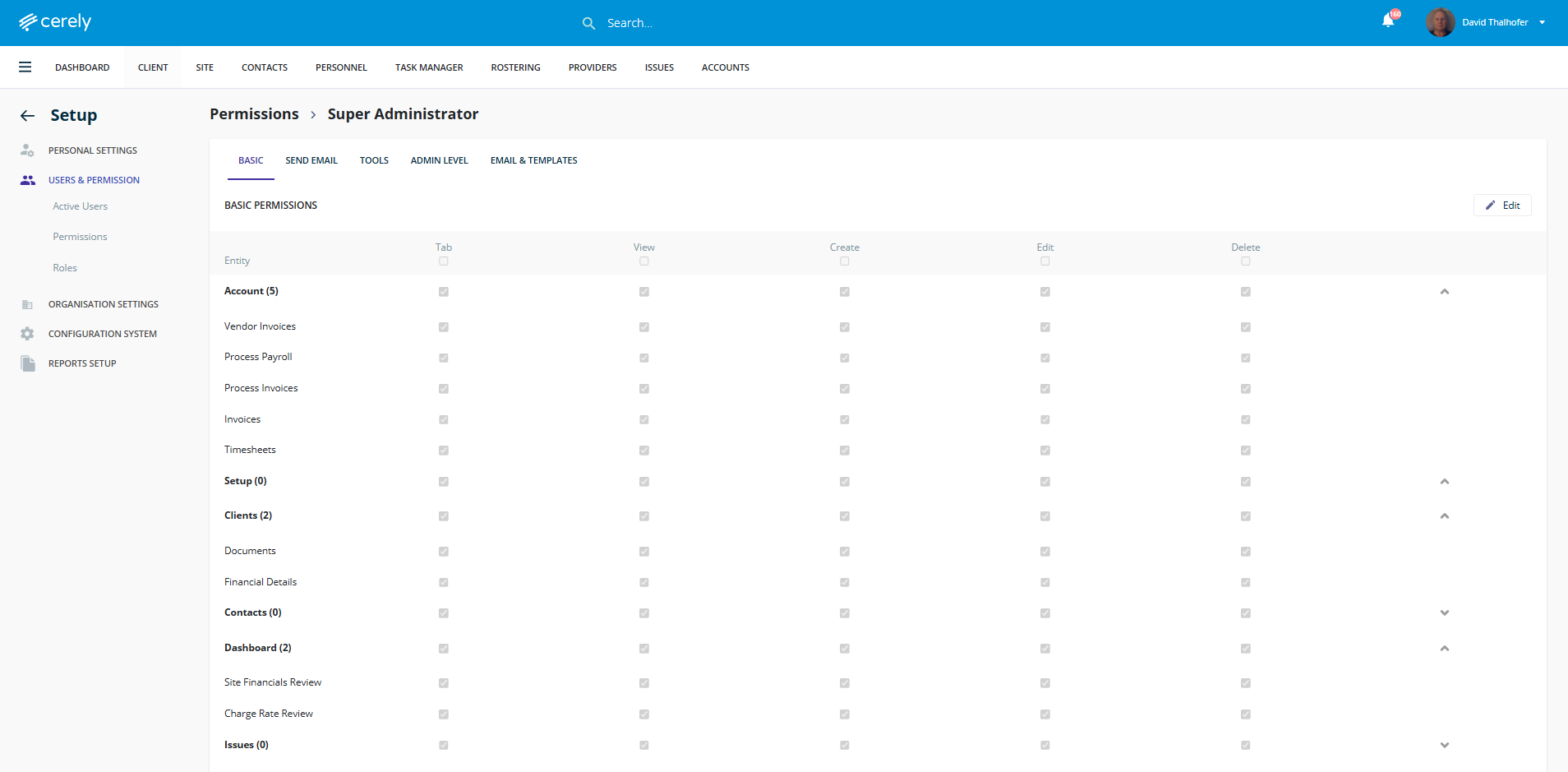
Super Administrator Profile Summary:
- Full access to all areas and features within Cerely
- Assigned as the account owner or accounts administrator
- Has the ability to view and edit all user permissions
- Note: This role cannot be edited to a different profile permission once granted
- Is automatically assigned to the person who originally set up the Cerely account
This role is critical for maintaining full administrative control over your platform and account structure.
How to View the Permission Profile Settings
Follow the steps below to view the current Permission Profile settings in Cerely:
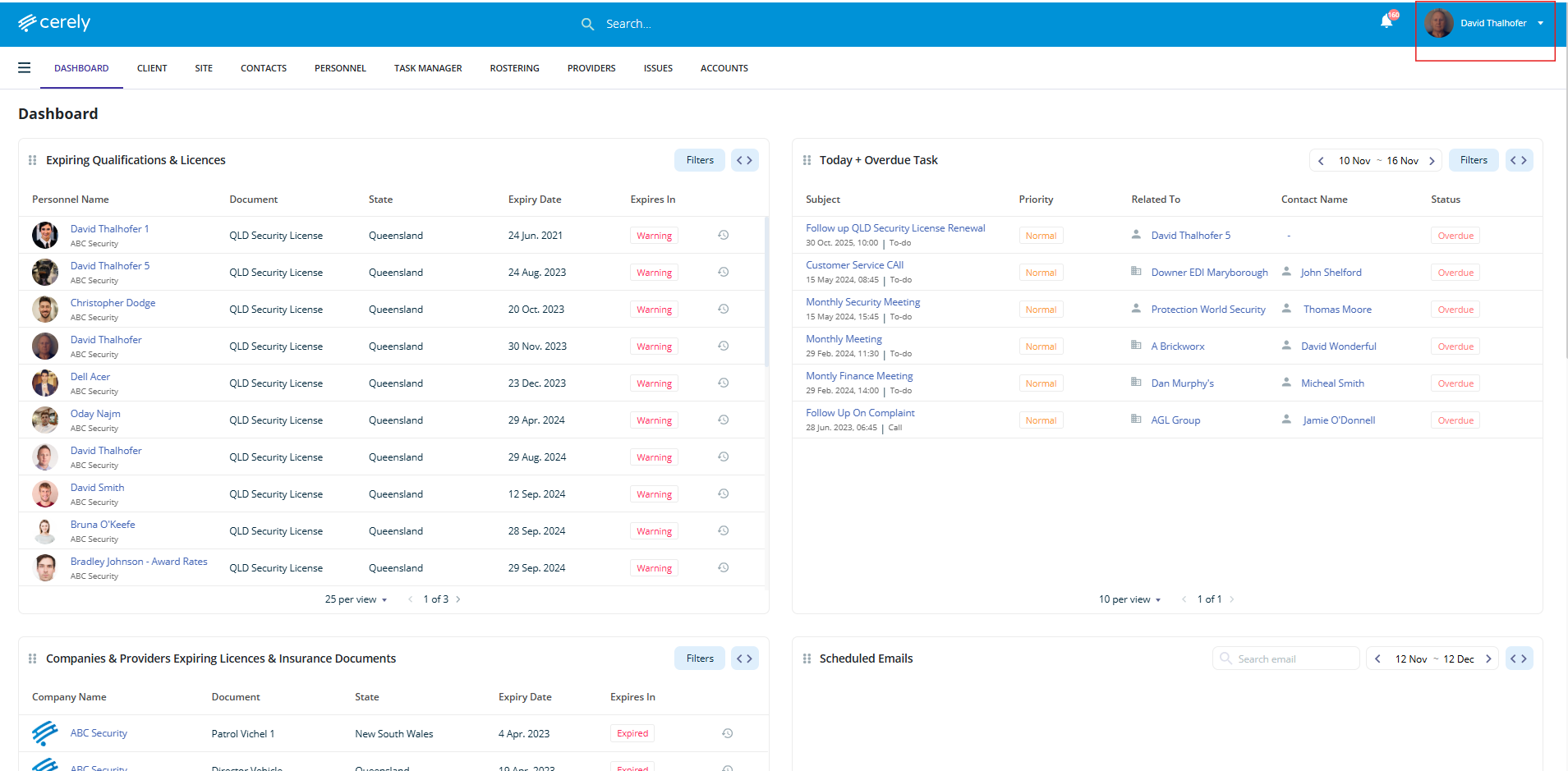
1. From the main menu, click your Profile Icon in the top-right corner of the screen
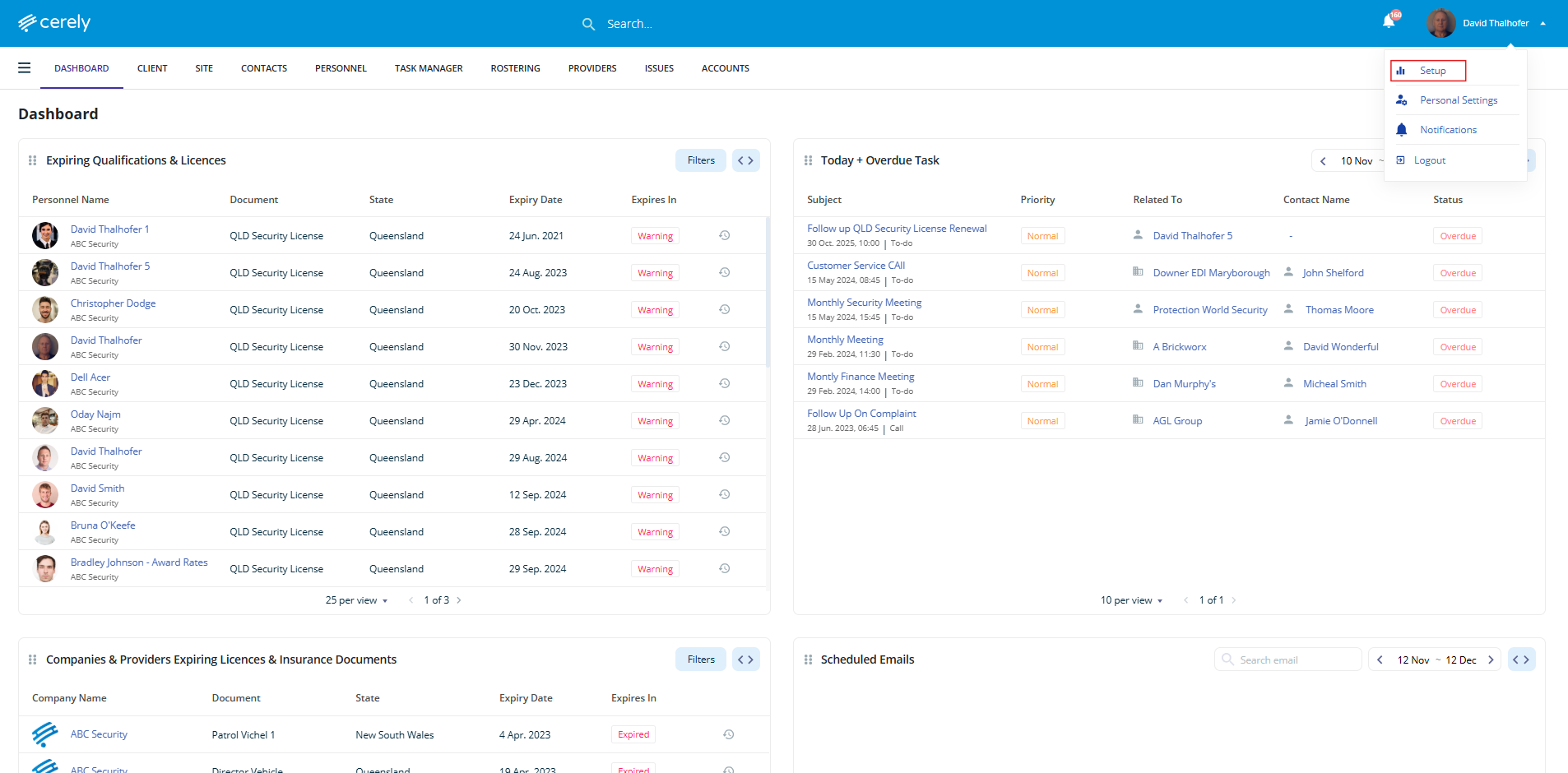
2. Select Setup from the dropdown menu
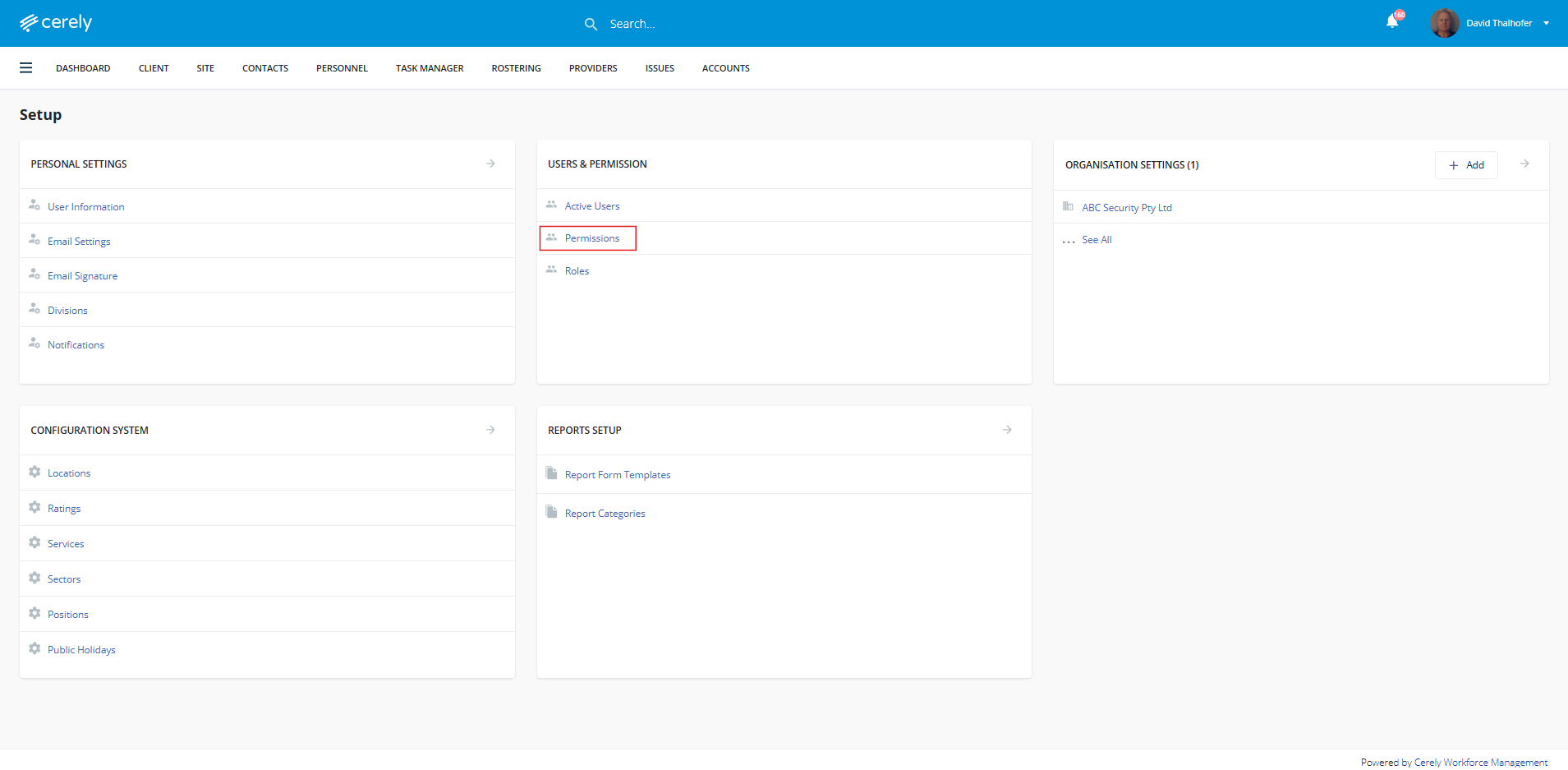
3. Under Users & Permissions, click Permissions
4. From the list select a permission profile to view the default settings
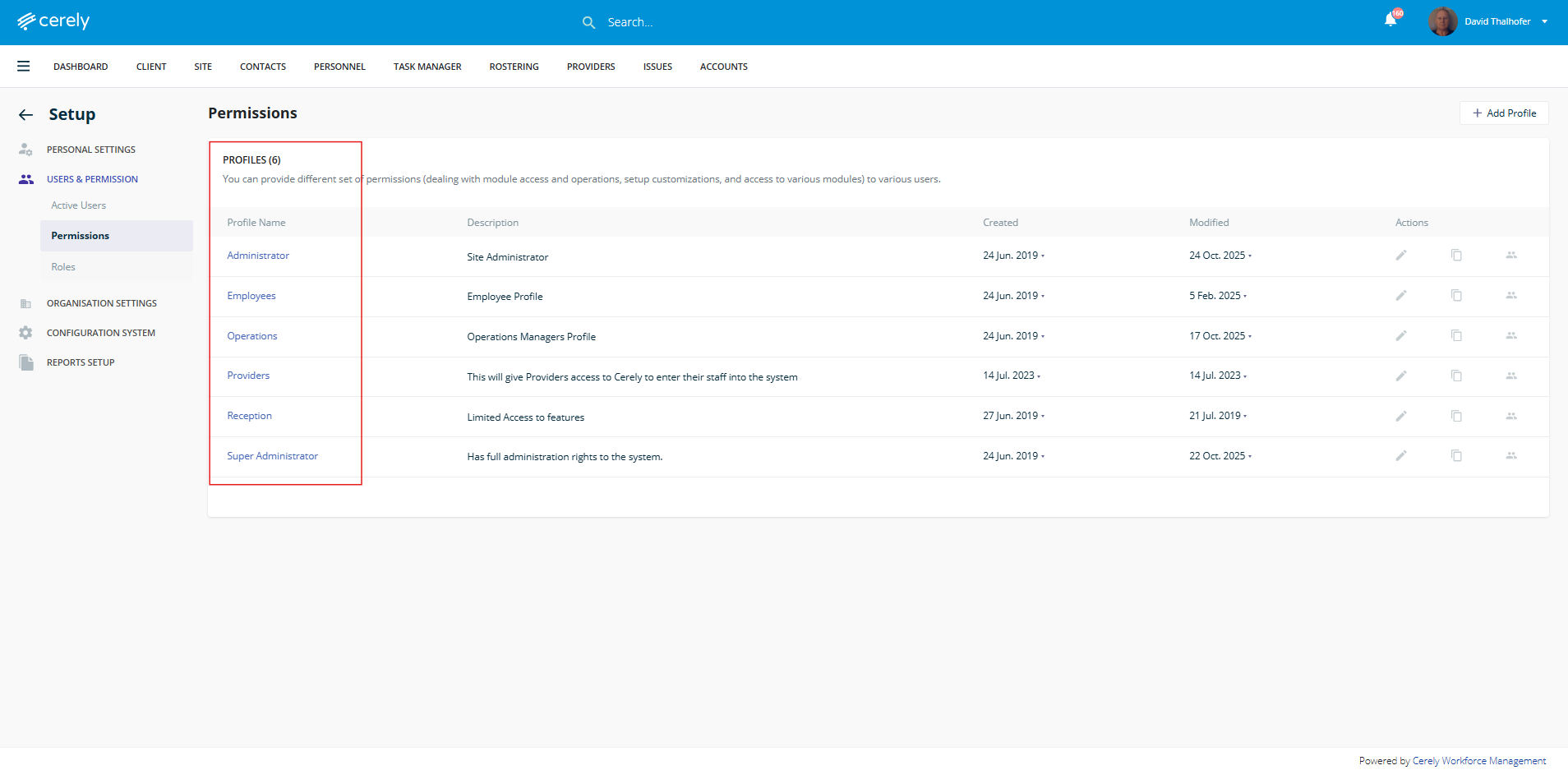
5. The permission profile screen will appear, showing all access levels across each category
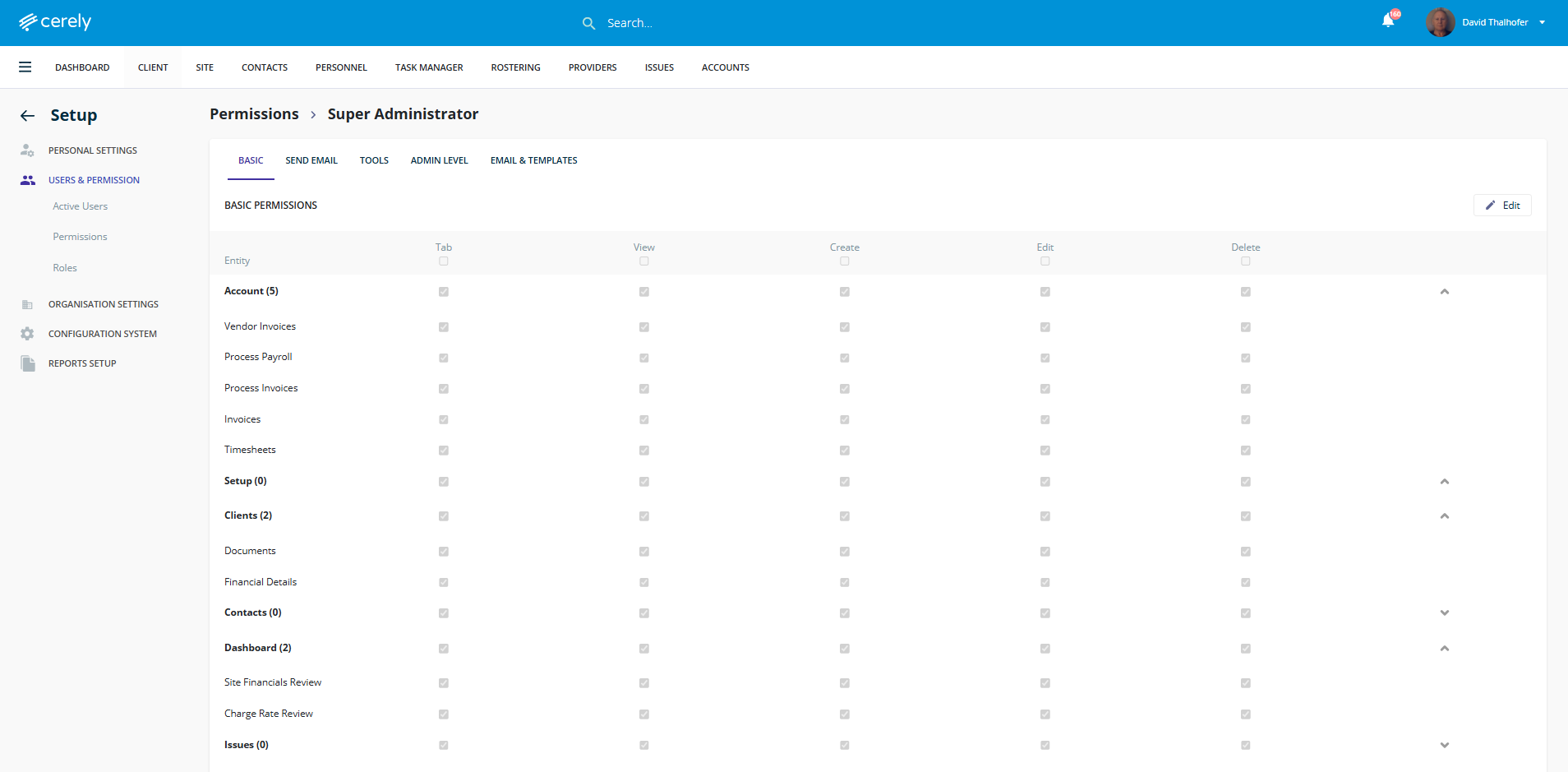
By default, every permission checkbox, including Tab, View, Create, Edit, and Delete, is enabled for this profile.
Tip: You can use this screen to review or clone a permission profile to create new custom permission profile as needed.
What the Super Administrator Can Access (by Default)
Under each category, all levels of access are enabled:
| Access Level | Description |
|---|---|
| Tab | The user can view and access the main module from the tab menu |
| View | The user can see records or data within that module |
| Create | The user can create new entries or data within the module |
| Edit | The user can update or change existing records |
| Delete | The user can delete records |
The screenshot below displays the typical Super Administrator permissions layout, with all areas fully accessible: